


Juneteenth 2026: Freedom Delayed, Freedom Celebrated

A reflection on history, Black Music Month, and the continuing journey toward equality.
By Walter Sundiata | RadioActive1 WBOB | June 18, 2026
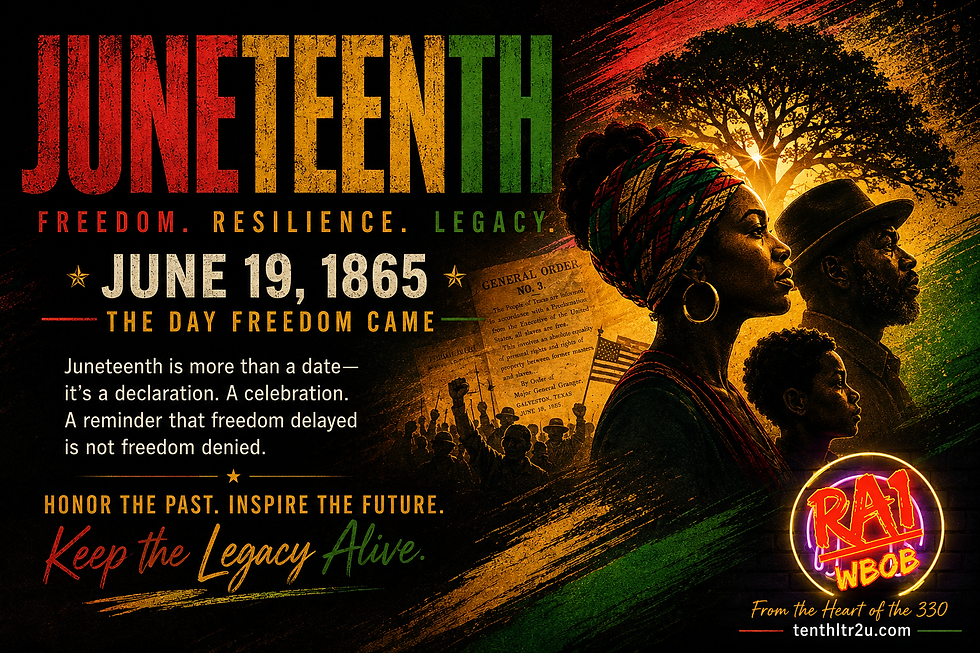
Each year, Juneteenth offers a chance to reflect on a defining chapter in American history and its continuing relevance. Observed on June 19, the day commemorates the arrival of Union troops in Galveston, Texas, in 1865, when slaves there were finally informed of their freedom—more than two years after the Emancipation Proclamation. That delay is central to the meaning of Juneteenth, underscoring the distance that can exist between principle and practice, and between freedom declared and freedom realized.
Juneteenth also deepens the national understanding of American history. It highlights the gap between the country’s founding ideals and the lived reality of slavery, exclusion, and delayed justice. For that reason, the holiday carries a dual significance: it is both a celebration of liberation and a reminder of how long freedom and equality have often taken to reach those most denied them. Long observed within Black communities as a day of remembrance, joy, and resilience, Juneteenth brings essential historical depth to the broader American story.

President Joe Biden played a significant role in establishing Juneteenth as a national holiday. After taking office in January 2021, he signed the Juneteenth National Independence Day Act into law on June 17, 2021. This legislation officially designated June 19 as a federal holiday, recognizing the end of slavery in the United States and honoring the resilience and contributions of African Americans.
Biden's decision to make Juneteenth a national holiday marks a crucial milestone in the United States' journey toward racial reconciliation and understanding. It highlights the importance of acknowledging and learning from the past to build a more equitable future.
What began as local gatherings focused on faith, family, music, storytelling, and shared meals has evolved into a national observance. Since Juneteenth became a federal holiday in 2021, public recognition of the day has expanded, but its core meaning has remained unchanged. At its heart, Juneteenth is about acknowledging truth, honoring freedom, and creating opportunities for education, reflection, and a more complete understanding of the nation’s history.
This is why Juneteenth is significant beyond being just a date on the calendar. It prompts important questions about who was included in the promise of freedom, who had to fight to claim it, and how a nation should address the gap between its ideals and its history. Emancipation was not the end of the story; it marked the beginning of a long struggle for equality, dignity, and full citizenship. The significance of Juneteenth today lies in its ability to connect that history to the ongoing work of building a more just society.
As communities celebrate Juneteenth each year, the day offers more than just remembrance. It provides insight into what freedom has required, what justice has demanded, and what responsibilities still remain. In this sense, Juneteenth is more than a historic commemoration; it is an enduring call to remember honestly, learn deeply, and continue the effort to create a more inclusive future.
RadioActive1 WBOB | From the Heart of the 330 | Music, news, and conversation for grown folks.


Comments