


America at 250: The Promise Series - The Promise of the Ballot

The Voting Rights Act at 61 — and Why the Right to Vote Still Has to Be Protected
By DJTen | RadioActive1 WBOB | August 11, 2026

On August 6, 1965, President Lyndon Baines Johnson sat at a desk in the President’s Room of the United States Capitol and signed his name to one of the most consequential pieces of
civil-rights legislation in American history.
Standing nearby were many of the men and women whose courage had forced the nation to act.
Dr. Martin Luther King Jr. was there.
Rosa Parks was there.
So were members of Congress, civil-rights leaders and activists representing a movement that had endured arrests, beatings, bombings and murder simply for demanding something the Constitution had supposedly guaranteed nearly a century earlier:
The Right to Vote.
The Voting Rights Act of 1965 was not the beginning of that promise.

The Fifteenth Amendment, ratified in 1870, had already declared that the right of citizens to vote could not be denied because of race, color or previous condition of servitude.
But between a constitutional promise and the lived reality of Black Americans stood nearly a century of organized resistance.
Literacy tests.
Poll taxes.
Intimidation.
Economic retaliation.
Violence.
And election systems deliberately constructed to make the ballot technically available while placing it practically beyond reach.
By the 1960s, the contradiction had become impossible to ignore. Nearly a hundred years after the Fifteenth Amendment, Black citizens in parts of the country were still routinely prevented from registering and voting through discriminatory practices, threats and bureaucratic obstruction.
Then Came Selma

On March 7, 1965—Bloody Sunday—marchers attempting to cross the Edmund Pettus Bridge on their way from Selma to Montgomery were violently attacked by Alabama state troopers and local authorities.
The images traveled across America.
Eight days later, President Johnson addressed a joint session of Congress and called for federal voting-rights legislation.
Congress eventually responded.
The House approved the final legislation 328–74 on August 3. The Senate followed the next day, 79–18.
The promise now had enforcement behind it.
A Right—and Someone Responsible for Defending It
That distinction matters.
The Voting Rights Act did not simply announce that discrimination in voting was wrong. It gave the federal government significant power to do something about it.
Among its provisions, the law prohibited voting practices that discriminated on the basis of race and authorized federal action to enforce the guarantees of the Fifteenth Amendment. Section 2 established a nationwide prohibition against racial discrimination in voting—a protection that remains part of federal law today.
Other portions of the original law subjected jurisdictions with histories of discrimination to federal oversight before they could change voting procedures.
That requirement—known as preclearance—became one of the Act's most powerful enforcement tools.
In 2013, however, the Supreme Court's decision in Shelby County v. Holder invalidated the formula Congress had used to determine which jurisdictions were subject to preclearance. Section 2's nationwide prohibition remained intact, but the advance-review mechanism was effectively disabled unless Congress adopted a new coverage formula.
And the debate over how the Voting Rights Act should operate has continued.
In April 2026, the Supreme Court again addressed the Act in Louisiana v. Callais, this time considering how Section 2 interacts with constitutional limits on the use of race in congressional redistricting.
The legal arguments change.
The political coalitions change.
The methods of voting change.
But the underlying question has remained remarkably consistent:
Who makes sure every eligible citizen can cast a ballot—and have that ballot counted?
That question carries particular weight in 2026.
Preparing for a Crisis That Hasn't Happened

This summer, some of the country's most senior Democratic senators did something extraordinary.
They participated in tabletop exercises designed to simulate potential disruptions surrounding the November midterm elections.
The scenarios were not predictions.
They were preparedness exercises.
But the possibilities they examined would have sounded almost like political fiction not long ago: highly realistic AI-generated videos purporting to show election fraud, threats against election workers, armed individuals appearing near polling locations, clashes between state and federal authorities and attempts to use federal power during disputed election circumstances.
Participants included Senate Democratic Leader Chuck Schumer and Senators Alex Padilla, Adam Schiff, Mark Warner, Elissa Slotkin and Raphael Warnock. Election lawyers and democracy experts presented scenarios and asked public officials to decide—in real time—how institutions should respond.
Again, these exercises do not establish that any of those events will happen.
But the fact that elected officials, election administrators and legal experts believe the scenarios deserve serious preparation says something important about the political environment surrounding the 2026 elections.
So does another development.
Senate Democrats complained earlier this summer that the administration had not provided the regular election-security briefings Congress historically receives concerning threats to election infrastructure and foreign interference. Reuters reported in June that senators said they had received only one such briefing as the midterms approached.
Meanwhile, disagreements continue over proposed changes to federal election law, voter-roll maintenance, identification requirements, mail voting and the extent to which Washington should become involved in election administration traditionally handled by states.
That makes this more than a debate about Democrats and Republicans.
It is a debate about the machinery of democracy itself.
And Then There Is the Justice Department
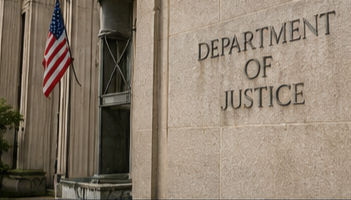
Which brings us back to 1965.
The original Voting Rights Act assigned an important enforcement role to the attorney general of the United States.
Today the Justice Department's Voting Section remains responsible for enforcing federal laws protecting access to the ballot, including the Voting Rights Act, the National Voter Registration Act and the Help America Vote Act.
That makes the leadership of the Justice Department especially consequential during an election year.
On August 10, Todd Blanche was sworn in as attorney general of the United States after narrowly winning Senate confirmation, 50–49.
Blanche had previously served as President Donald Trump's personal criminal-defense attorney and had been serving as acting attorney general since April. Two Republican senators joined Democrats and independents in opposing his confirmation, citing concerns about Justice Department independence and politicization.
Blanche's supporters argue that he is an experienced former federal prosecutor capable of leading the department fairly.
His critics question whether an attorney general who so recently represented the president personally can demonstrate sufficient independence when decisions involve the president's political interests.
That concern is not merely philosophical.
The Justice Department is both a law-enforcement institution and one of the federal government's principal guardians of voting rights.
In May, the department's Office of Legal Counsel concluded that the Civil Rights Division could obtain statewide voter-roll information and share it with the Department of Homeland Security as part of efforts to identify people believed to be ineligible to vote.
Those powers may be exercised lawfully.
They may also invite legitimate questions about oversight, purpose, transparency and the boundaries between election enforcement and political influence.
Which is why independence matters.
Not because an attorney general must oppose the president who appointed him.
But because the Justice Department must serve the Constitution and the law regardless of who occupies the White House.
Warnings From People Who Were Once Inside
Some of the most pointed warnings are coming not only from longtime opponents of Donald Trump, but from people who once worked for him.
Ty Cobb served as special counsel in the Trump White House during the president's first term.
Today, he has become an outspoken critic.
In recent interviews, Cobb has warned about the durability of American democratic institutions and raised concerns about possible federal intervention surrounding the 2026 elections, including the potential use of federal agencies in ways that could affect the election environment.
Other former intelligence, national-security and federal officials have voiced related concerns.
A group of hundreds of former government officials has warned that traditional institutional guardrails are under increasing pressure as presidential authority expands, dissenters are removed or marginalized and independent agencies face demands for greater political loyalty.
These are allegations and warnings—not proof that an election crisis is inevitable.
That distinction matters.
Democracy is not strengthened by exaggeration.
It is strengthened by vigilance grounded in facts.
But January 6, 2021 permanently changed what Americans can responsibly dismiss as impossible.
The country has already experienced a sitting president attempting to remain in power after losing an election, a violent breach of the United States Capitol and efforts across several states to challenge or overturn certified election results.
Former Trump White House attorney Ty Cobb himself said years ago that the events surrounding January 6 represented an extraordinary attempt by a president to retain power outside normal constitutional means.
That history is why present-day warnings receive attention.
Not because another January 6 is predetermined.
But because January 6 already happened once.
The Promise Was Never Self-Enforcing
There is a temptation when looking at the black-and-white photographs from August 6, 1965 to treat the Voting Rights Act as the conclusion of a story.
Johnson signs.
King watches.
America moves forward.
Roll credits.
But history doesn't work that way.

The Voting Rights Act itself exists because the Fifteenth Amendment—written nearly a century earlier—proved that constitutional language alone was insufficient.
A promise without enforcement can become little more than words on paper.
And enforcement without independent institutions can become something else entirely.
That is why the Voting Rights Act belongs in America at 250: The Promise Series.
Because the promise was never merely that Americans would be permitted to stand in line at a polling place.
The larger promise was that citizens could choose their government.
That their votes would be counted.
That public officials would accept lawful results.
That government agencies would enforce the law rather than serve political interests.
That courts would remain available when those protections failed.
And that power would transfer peacefully when voters decided it should.
Those principles belong to no political party.
Republicans should expect them when Democrats govern.
Democrats should expect them when Republicans govern.
Independent voters should expect them from both.
And every American should insist that the same rules apply regardless of who wins.
Sixty-one years after Lyndon Johnson signed the Voting Rights Act, the question confronting the country is therefore not whether we still admire what happened on August 6, 1965.
The question is whether we still understand why it had to happen.
Generations of Americans fought, marched, bled and sometimes died because they understood something fundamental:
Democracy cannot depend upon the goodwill of those who hold power.
It requires rules.
It requires institutions.
It requires accountability.
And occasionally, it requires ordinary citizens to remind their government of the promise it made to them.
The ballot is one of those promises.
And like every promise worth keeping—
it has to be protected.


Comments