


Daily WBOB Briefing — August 16, 2026

Today’s strongest thread is who gets to participate—and on whose terms. The fight over November’s voting rules is moving toward the Supreme Court as civil-rights groups prepare to return to the Lincoln Memorial. Here in Akron, the Jazmir Tucker case has moved from a criminal-justice question to one of municipal accountability. Zambia offers an international reminder of how fragile public confidence can become while votes are still being counted, and Spotify is beginning to force the music business to answer a new question: when listeners discover an ‘artist,’ are they discovering a person?
1. Mail-Ballot Fight Heads Toward the Supreme Court
The Trump administration has asked the U.S. Supreme Court to revive portions of President Trump’s executive order tightening mail-voting procedures before the November 3 midterm election. A federal judge expanded an earlier injunction nationwide, blocking the Postal Service from implementing provisions affecting delivery of ballots from states that did not meet federal requirements specified in the order.
Why it matters to WBOB: With the election less than three months away, a Supreme Court decision could affect the actual mechanics of voting—and therefore what WBOB listeners need to know before casting ballots.
WBOB follow-up: Start a 2026 Voting Rules Watch. Whenever a significant court or legislative action occurs, translate it into three questions: What changed? Who is affected? What does an Ohio voter need to do differently, if anything?
2. Akron’s Jazmir Tucker Case Turns Toward Accountability and Reform
Akron has fired Officer Davon Fields, who fatally shot 15-year-old Jazmir Tucker in November 2024, and the city has agreed to a $4.75 million settlement with Tucker’s family, pending court approval. Mayor Shammas Malik cited multiple departmental-policy violations, including failures involving medical aid and body-camera procedures. A grand jury previously declined to indict Fields, while the police union says it will challenge his dismissal.
Why it matters to WBOB: The newest chapter raises a larger question than whether an officer was criminally charged: what does accountability look like when conduct does not lead to prosecution but the city concludes departmental rules were violated?
WBOB follow-up: This is strong material for Word on the Street. Rather than retelling the shooting, examine what Akron says it has learned from the case: body-camera activation, rendering aid, supervision, training and whatever policy changes follow the settlement.
3. March on Washington 2026 Is 12 Days Away
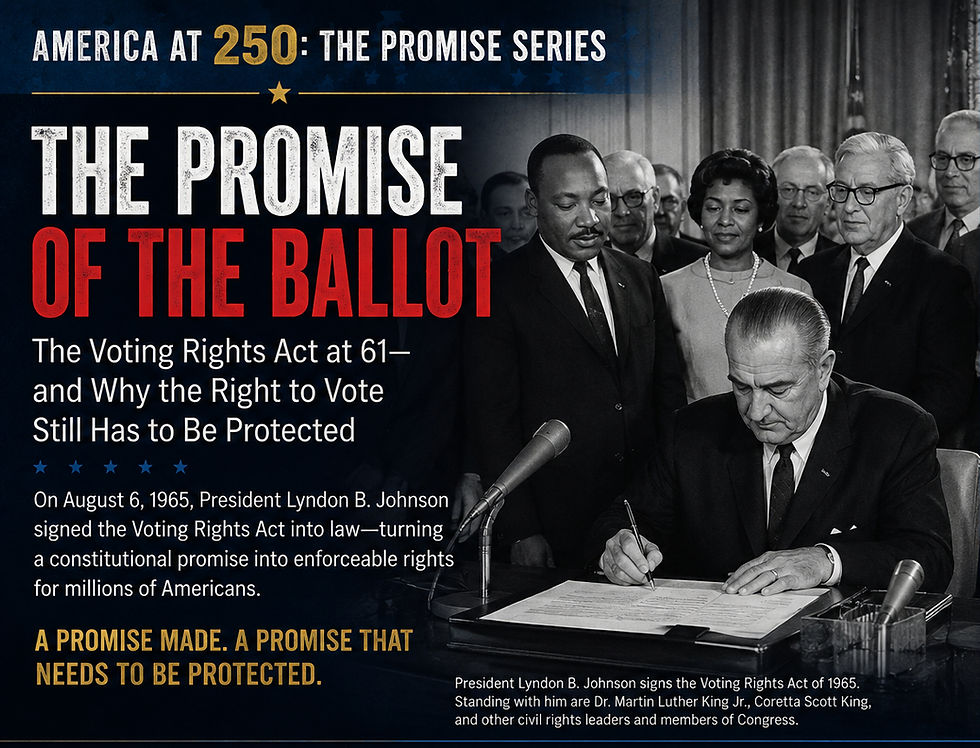
Civil-rights organizations will return to the Lincoln Memorial on Friday, August 28, for March on Washington 2026: Defend the Vote, exactly 63 years after the 1963 March on Washington for Jobs and Freedom. Organizers are connecting the gathering to voting rights, equal opportunity, economic dignity and federal civil-rights protections.
Why it matters to WBOB: This connects Black history, voting rights and America at 250 almost perfectly: the original march articulated part of America’s unfinished promise; the 2026 march asks why that promise still requires defending. WBOB follow-up: Put the March on Washington installment of America at 250: The Promise Series into production, using the structure 1963 → what was promised → what changed → what remains unfinished → why people are marching again in 2026.
4. Zambia Counts Votes Under Heightened Security
Zambia resumed counting ballots after its Electoral Commission temporarily suspended the process because election workers were attacked and marked ballots were stolen. Incumbent President Hakainde Hichilema is seeking a second term against opposition challenger Brian Mundubile. Election officials have warned candidates not to declare themselves winners before the official result.
Why it matters to WBOB: Attacks on election workers, stolen ballots, premature victory claims and confidence in the counting process are democratic-governance issues regardless of country.
WBOB follow-up: Watch rather than editorialize until the official result and the candidates’ responses are known.
5. Spotify’s AI Persona Rule Creates a New Gatekeeping Job for Radio
Beginning in mid-September, Spotify says profiles representing synthetic performers will start receiving an AI Persona label. Those personas generally will not be included in Spotify’s editorial or personalized recommendations unless a listener deliberately follows them.
Why it matters to WBOB: Independent radio programmers increasingly act as human gatekeepers after an algorithmic gatekeeper. If a new artist reaches WBOB through streaming discovery, knowing whether that identity represents an actual performer is becoming part of basic music research.
WBOB follow-up: Add one line to the new-music vetting process: Artist identity/origin verified? That does not mean rejecting every recording involving AI. It means distinguishing AI used as a production tool from a synthetic persona being presented to listeners as a human artist.
Today’s Editorial Lead
For Back on the Block, the mail-ballot/Supreme Court story is today’s lead because it is the most time-sensitive institutional development. On the production board, March on Washington 2026 deserves priority because it can develop into an America at 250 article, historical feature, podcast discussion, social package and Weekly Briefing centerpiece. The Jazmir Tucker story should remain distinctly local, focused on what accountability and reform look like here in Akron.

Comments